
Two editors can use the exact same shots and the exact same song, and one film will grip you while the other drags. The difference is pacing in wedding video editing — the control of rhythm, shot length, and emotional flow that decides whether a viewer leans in or checks out. It is the most invisible skill in editing and one of the most important. Here is how to master it.
What pacing actually means
Pacing is the rhythm of your edit — how often you cut and how long each shot is allowed to breathe. Short clips and frequent cuts create energy and momentum; long, held shots create stillness and emotion. Neither is right or wrong; the craft is choosing deliberately rather than cutting on autopilot.
Let the music lead
Choose your track before you fine-cut and let it set the tempo. Land your cuts on the beat, hold through the quiet passages, and tighten the cutting as the music builds toward its peak. A song has its own rises and falls; when your edit moves with them instead of against them, the whole film feels intentional even to a viewer who could never explain why.
Vary the pace across the film
A wedding has natural movements — the slow, tender getting-ready; the building anticipation before the ceremony; the emotional peak of the vows; the explosive energy of the party. A film cut at one constant speed flattens all of that into monotony. Match your pacing to each section and the film gains a shape that carries the viewer through.
Pacing in wedding video editing: serving the emotional arc
The best pacing in wedding video editing follows the emotion, not just the beat. Slow right down for the biggest moments — the first kiss, the vows, a parent’s tears — and let them land without rushing. Pick the energy back up for the celebration, and resolve gently at the end. Think of the whole film as a single emotional curve and pace each beat to where it sits on that curve.
Shot length and when to hold
Hold a shot for as long as it is giving the viewer something — emotion, information, or beauty — and cut the moment it stops. Resist cutting simply because you can; a held reaction often carries more weight than three quick angles. Reaction shots and well-placed B-roll give you the breathing room to control rhythm without losing momentum.
Use slow motion and B-roll as rhythm tools
Slow motion stretches an emotional beat and tells the viewer to feel it; B-roll provides a pause between intense moments so they do not blur together. Treat both as pacing tools rather than pretty filler — placed with intent, they are how you slow a film down or let it breathe without it ever feeling like it has stalled.
Common pacing mistakes
The usual ones: cutting so fast the film becomes exhausting, every shot the same length so it feels mechanical, slow sections that drag past their welcome, and ignoring the music’s dynamics entirely. Almost all of them come from a lack of variation — the fix is to consciously change the rhythm as the emotion changes.
When to outsource the edit
Pacing is a feel you develop over hundreds of edits, and it takes time and focus to get right on every film. When your calendar is full, a tight wedding video editing workflow or an outside edit team protects that quality rather than letting tired pacing slip through.
Love Story Editing brings that editorial instinct to every film through our wedding video editing service. Choose a teaser edit, a ceremony edit, or a full wedding film, see the work on our video portfolio, or request a quote.
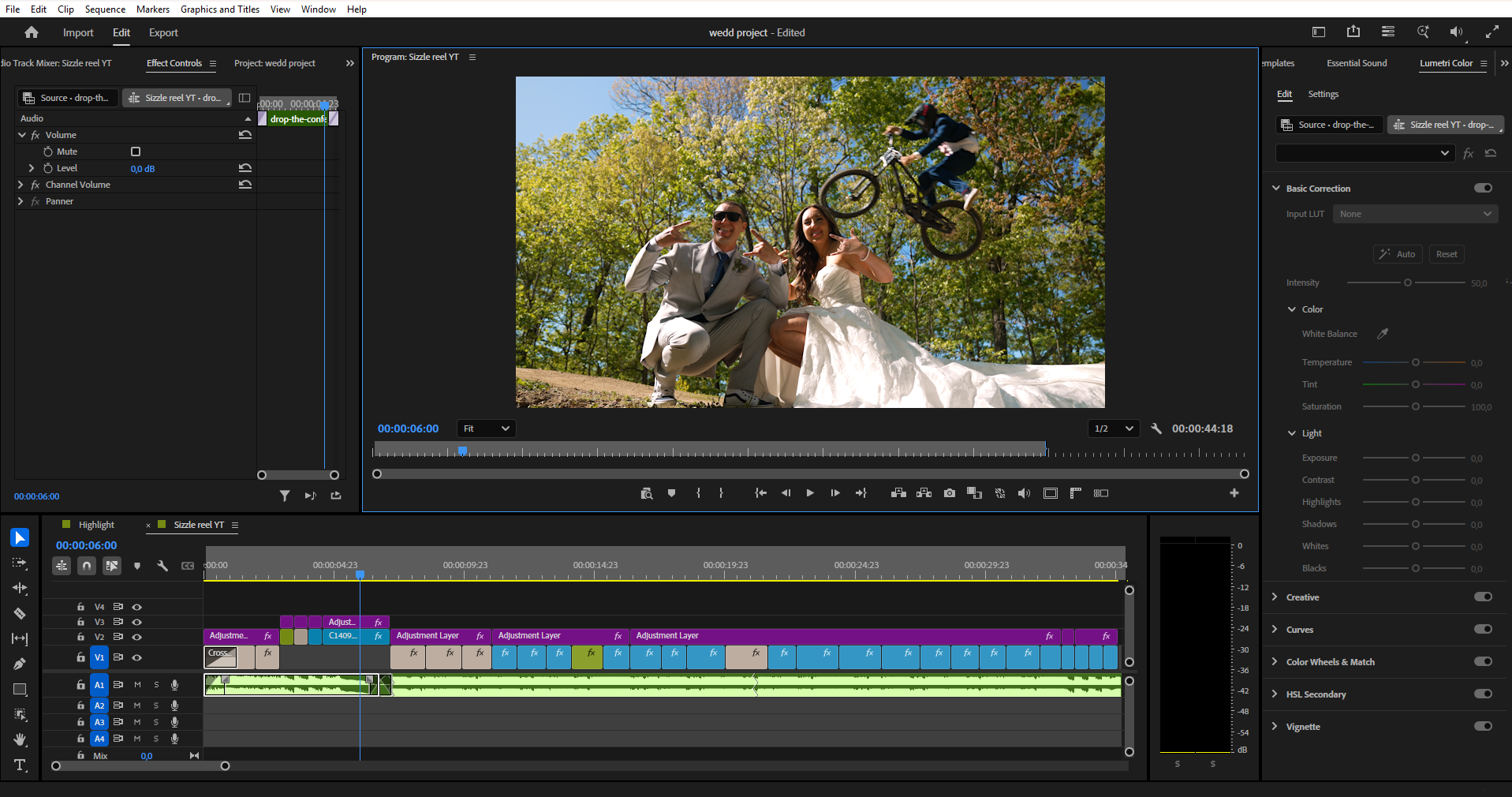
The takeaway
Pacing in wedding video editing is the art of controlling rhythm in service of emotion: let the music lead, vary the pace across the film’s movements, slow down for the big moments, and hold shots only as long as they earn it. Master it and an ordinary set of clips becomes a film people cannot look away from — and when time is short, it is worth protecting that craft by delegating.